

Who Owns Scientific Truth?
Power, Knowledge, and the Limits of Scientific Authority
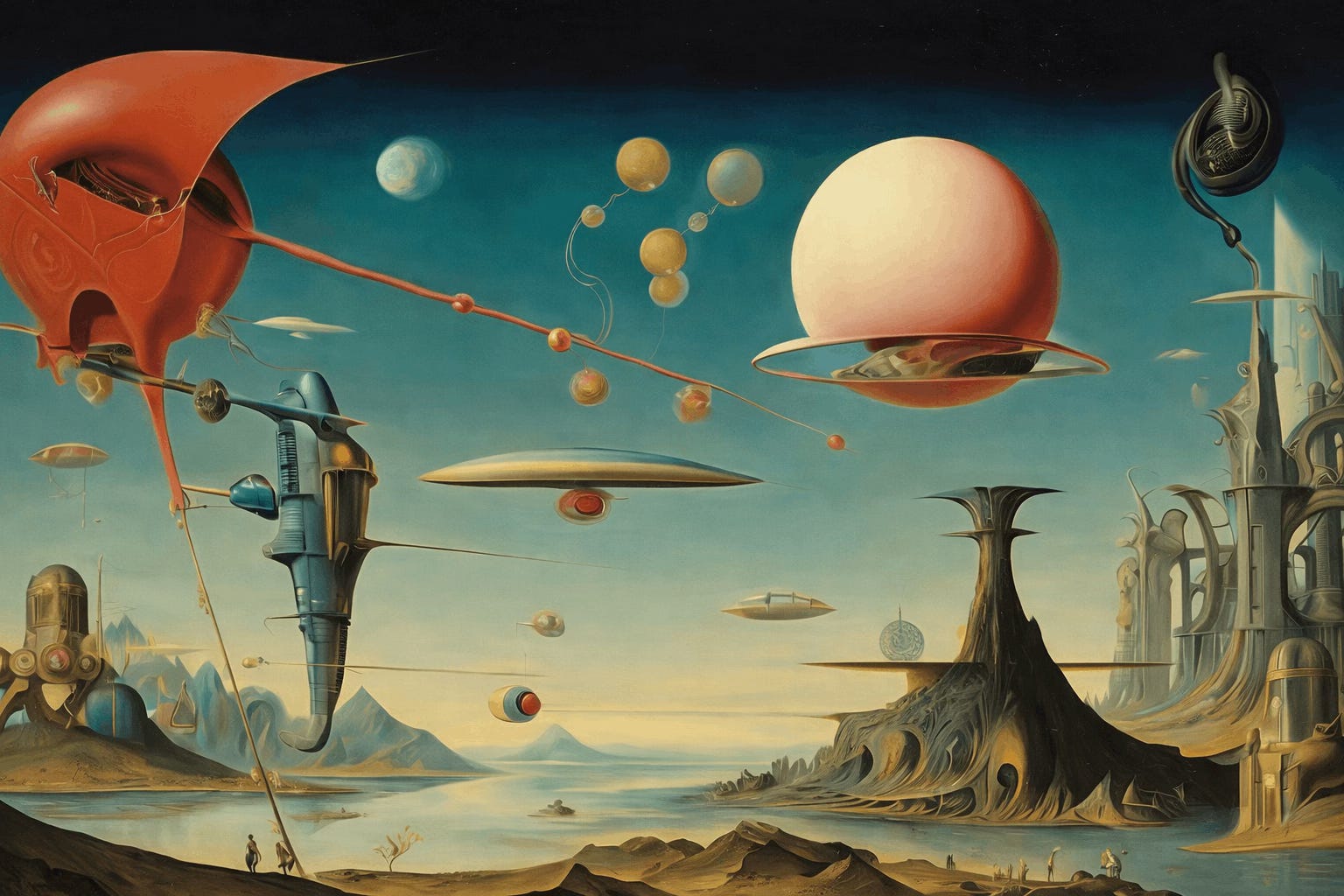
The temple of science is often portrayed as a sanctuary built of pure reason, where truth shines autonomously, dispelling the fog of ignorance.
Yet, when we pull back the curtain of idealism and touch the texture of history, we find that the foundations of this temple have always borne the fingerprints of power. Science, the brightest star in the constellation of human civilization, has never escaped the gravitational pull of a field shaped by politics, capital, and ideology. It has never been solely about “discovering” truth but also, under the gaze of certain forces, about “defining” what truth is.
Science becomes the ultimate fortress of interpretive authority. Whoever masters the language that explains reality holds the scepter that shapes collective perception. This is first reflected in the choices of “what to research” and “what not to research.” Large-scale, organized inquiry requires resources, and the flow of these resources is rarely value-neutral. It tends to favor areas that can consolidate existing power structures and deliver clear returns—whether in military advantage, commercial profit, or political legitimacy. Research directions that might fundamentally challenge prevailing economic models or social orders, even if scientifically significant, are often marginalized as “impractical” or “lacking in application,” or confined to small-scale, non-public exploration.
The deeper influence lies in the definition and filtration of “what constitutes scientific truth.” Historically, when certain scientific theories fundamentally clashed with dominant ideologies or entrenched interests, they often faced systematic exclusion and suppression rather than academic debate. The Lysenko affair in the Soviet Union is an extreme but clear example: genetics was not dismissed for scientific inadequacy but was declared “reactionary” because it contradicted the officially prescribed philosophical doctrine. This was an act of directly defining “correct science” through administrative and propagandistic power. More commonly, such filtration operates subtly—through funding biases, journal review standards, academic promotion mechanisms, and mainstream media narratives—collectively maintaining the boundaries of accepted scientific consensus and isolating dissenting voices.
The root of power’s fervor in fencing science lies in fear—fear of uncertainty and loss of control. A stable structure of governance requires a stable framework for interpreting reality. Science provides the most compelling version of such a worldview. If scientific discoveries continually undermine the foundational assumptions on which society operates—such as redefining life, consciousness, or the principles of social cooperation—they may trigger systemic risks that are difficult to manage. Power desires a “safe” science: one that delivers technological progress to consolidate strength (such as military or surveillance technologies) without fundamentally questioning the presuppositions on which power itself rests, and without provoking disruptive philosophical or ethical reflections.
Today, we stand at a paradoxical juncture. On one hand, technological monopolies and data control have concentrated the tools of science to an unprecedented degree. On the other, the rise of open science, citizen science projects, and global knowledge networks is quietly diluting the monopoly on interpretive authority. Science has never been pure, but this does not mean we should abandon the pursuit of its purity.
The true spirit of science lies in maintaining a humble yearning for transcendent truth, even while recognizing that it can never fully escape the domain of power. It demands that we not only explore the mysteries of nature but also reflect on the order behind knowledge production; that we not only embrace the power brought by technology but also question for whom this power is wielded.
Only when we cease to place science on an unquestionable altar and instead view it as a profound, human endeavor—fraught with struggle, capable of both subjugation and liberation—do we truly begin to understand it. And only then can we hope to guide it to illuminate a broader horizon for humanity.