

Do Not Drift. Become a Star
Heraclitus, Nietzsche, Stoicism, and the Discipline of a Whole Life
In the torrent of existence, most people drift like fallen leaves in a Heraclitean river—panta rhei, all is flux—tossed by the winds of circumstance. Their paths are shaped not by inner law, but by countless mediocre measures, wavering between desire and reality. Life becomes reactive rather than directed.
Against this condition, Nietzsche calls for a radically different way of being: to resolve to live a complete, whole, and perfected life. Not perfection as static purity, but as active becoming. The guiding image is no longer the leaf, but the star—fixed in its course, governed by an inner necessity rather than external pressure. This star embodies what the Stoics called the hegemonikon: the ruling principle within, ordered by an unshakable logos, a universe unto itself, undisturbed by the chaos of fortune.
How does one transform from a drifting leaf into a star with a constant course?
It begins with the awakening of wisdom. Ancient insight consistently affirms that before Heaven grants fortune, it first opens understanding. This opening is not the accumulation of information, but the recognition of order—what Indian philosophy names dharma first. Dharma is the foundational principle that precedes success, pleasure, and power. To ignore it while pursuing material gain (artha) or sensual satisfaction (kama) is to invite disorder, both personal and social.
This insight finds a parallel in Sāṃkhya philosophy, which locates the root of suffering not in fate or matter, but in ignorance. Nothing arises from nothing; all phenomena—from stardust to thought—are transformations of primordial nature governed by enduring law. Wisdom, then, is alignment with what already is.
Recognition alone, however, is insufficient. Alignment demands discipline. Here, wisdom must become practice.
This is why figures as distant as the Stoics and Steve Jobs converge on the same intuition: scarcity can be abundance, and discipline can produce joy. Asceticism and minimalism are not ends in themselves, but tools for sharpening perception—ways of restoring clarity by stripping away noise. To see clearly again is to see like a child, but becoming childlike requires loss: the shedding of the constructed, inauthentic self.
This self-negation is arduous. It entails abandoning what Heidegger called the They-self (das Man)—the identity assembled from social expectation, desire, and fragmented information. As Plato observed in the Phaedo, the body is not evil, but when ruled by untamed appetite, it becomes the soul’s prison. Mastery is not suppression, but liberation: the clearing of space for the inner light to emerge.
With awakened wisdom and sustained discipline, one discovers within the flux of life an immutable center. This center is not inert; it is dynamic and generative. Plotinus described it as ekstasis—a standing outside oneself that is simultaneously a return to the source, an emanation from the One. From this center, clarity radiates outward, as lines from a point.
Practical judgment follows naturally. In moments of hesitation, the answer is often no. When opinions conflict, the wiser path is frequently the one that demands greater short-term sacrifice but promises deeper long-term coherence. Here, evolutionary logic and thermodynamic principles quietly reappear within human life: living systems tend toward configurations that optimize energy, information, and order over time.
Grounded in this inner orientation, one also begins to transcend the illusion of time. Obsession with past glory or imagined future utopias breeds fanaticism, resentment, and persecution. Those who govern—whether a polity or the self—from the perspective Marcus Aurelius called sub specie aeternitatis, under the aspect of eternity, incline instead toward peace.
True power lies not in controlling outcomes, but in responding brilliantly to each situation as it arises. The highest ideals do not wait for a perfect future; they manifest only in the present. As Carlo Rovelli reminds us, knowing is always provisional illumination: yesterday’s ignorance clarified today, today’s obscurity awaiting tomorrow’s light. Understanding moves forward not by certainty, but by refinement.
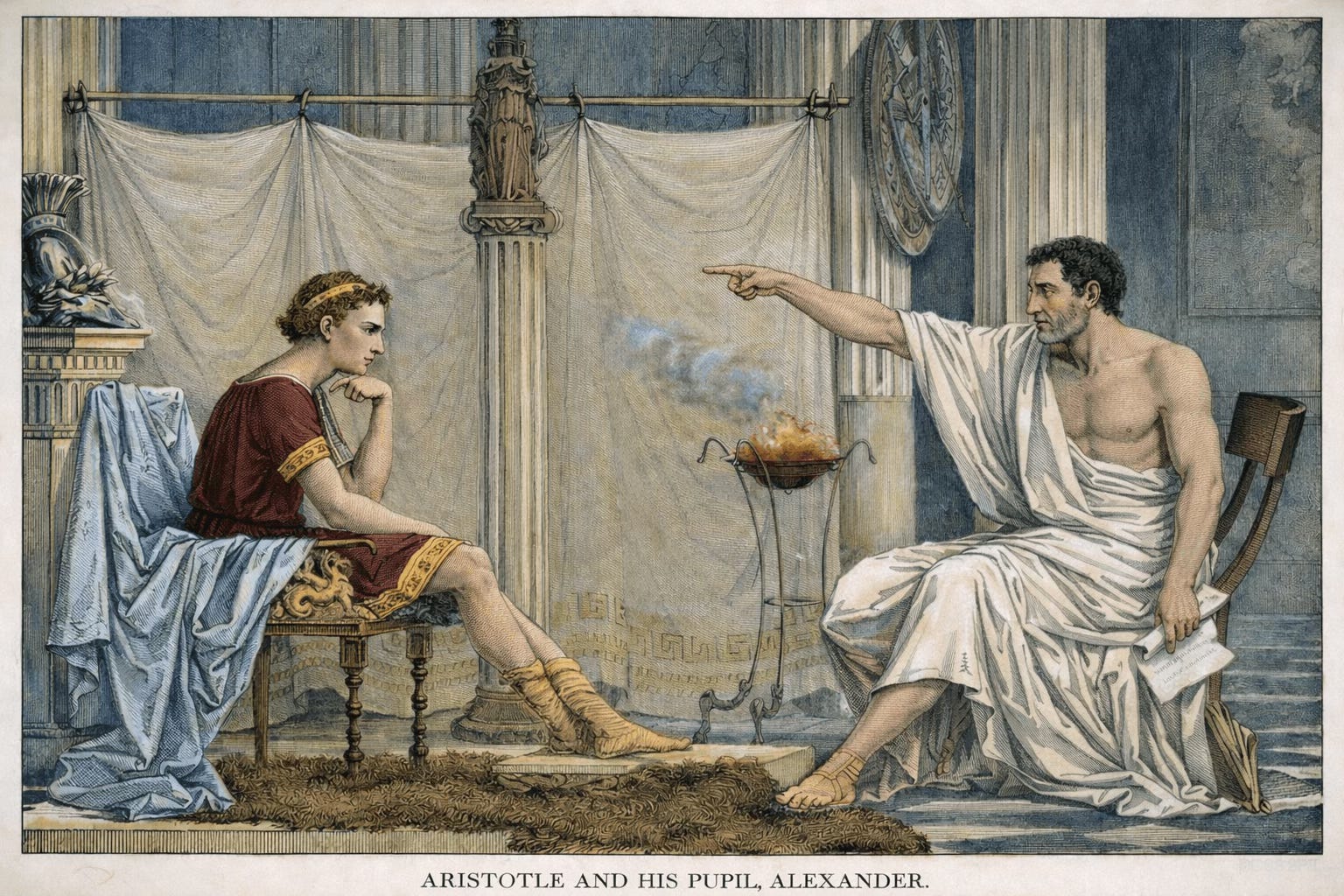
Ultimately, this entire path of cultivation is not about importing goodness from without, but about awakening what already resides within. Aristotle called these capacities the intellectual virtues—latent potentials of the soul, waiting to be actualized. In the Platonic and Spinozistic vision, the universe itself is not morally indifferent. Deus sive Natura—God or Nature—has a directionality: toward intelligibility, order, and truth, a tendency visible even in the mathematical harmonies embedded in nature.
To live in accordance with one’s inner goodness is therefore not an act of rebellion against the world, but of alignment with it. Even amid external chaos, the orbit of the inner star remains steady, resonating silently with the deep, mathematical harmony of the cosmos.