

What If the West Had Chosen Democritus Instead of Plato?
Naturalism, Monotheism, and the Forgotten Alternative
On the early path where Western thought converged with the world of monotheism, the encounter between philosophy and religion decisively shaped the spiritual landscape of future civilizations.
Among these, the systems of Plato and Aristotle, due to their transcendent and teleological nature, were systematically absorbed by Christianity and Islam, becoming the rational cornerstone for constructing theological edifices. From Augustine’s fusion of Platonic “Form of the Good” with the City of God, to Aquinas’s use of Aristotelian logic to argue for the “Unmoved Mover,” the ideas of these philosophical giants provided profound philosophical justification for faith, allowing it to stand firm on rational grounds and giving rise to a complex spectrum of thought from Scholasticism to mystical traditions like the Kabbalah.
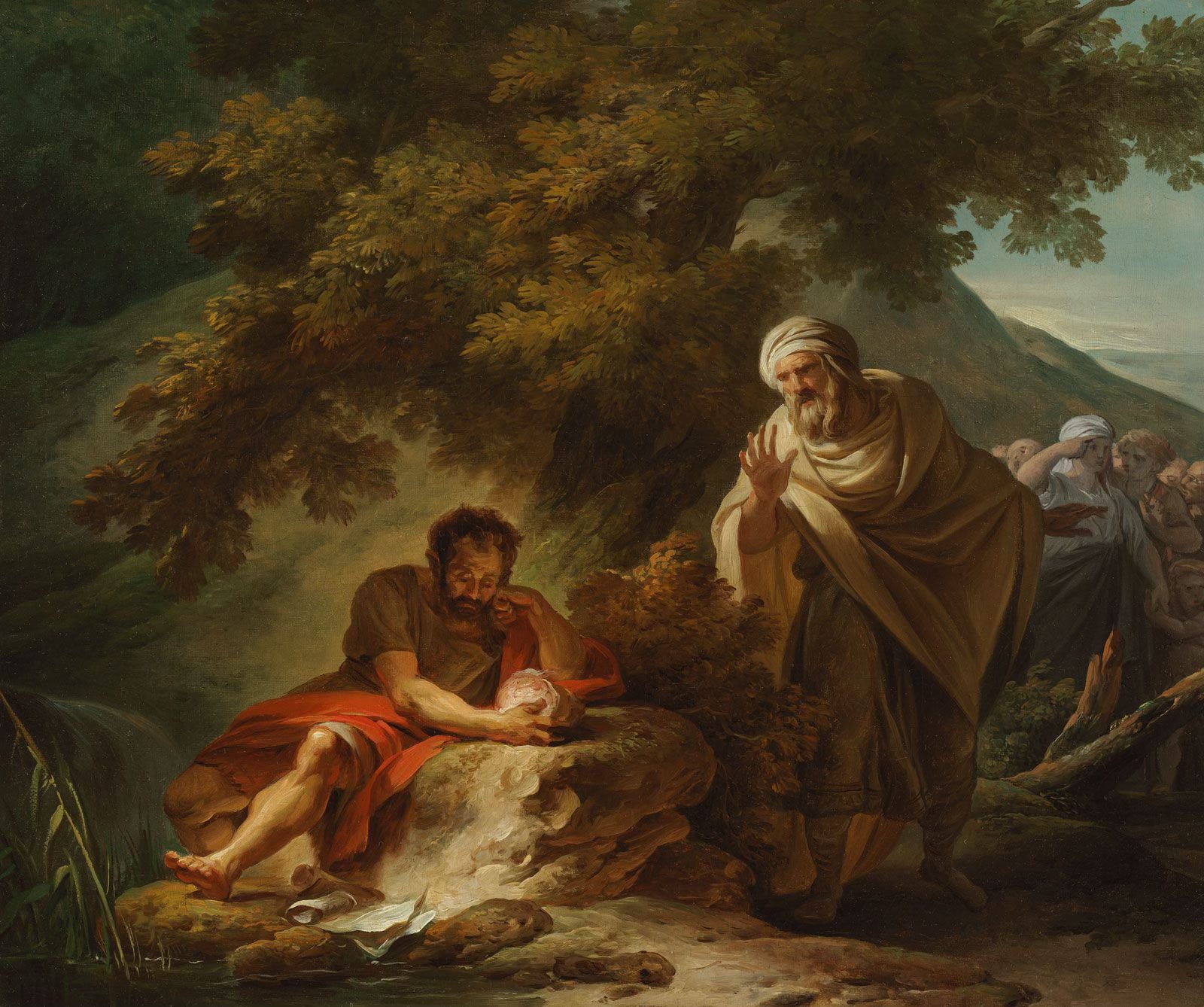
Yet, alongside this illuminated mainstream path, another road had emerged as early as ancient Greece, only to be buried by the sands of history—that of Democritus. In stark contrast to his canonized contemporaries, Democritus chose a path of thoroughgoing naturalism and rationalism. His atomistic worldview, which reduced all things to the mechanical motion of atoms in the void, fundamentally dissolved the space for divine intervention and the immortality of the soul. This thinking was fundamentally incompatible with the religious framework destined to dominate the West for a millennium. Perhaps for this very reason, not one of the over seventy works he produced in his lifetime survives intact, remaining only as fragments and echoes—ghosts of ideas whispering of an alternative possibility.
The tragedy of Democritus’s intellectual legacy lies not only in its destruction but in the depth of its oblivion. He was not merely a simplistic materialist; the core of his ethics was precisely the pursuit of tranquility of mind and happiness (eudaimonia). He advocated achieving a state of serene “freedom from fear and turmoil” through moderation, balance in life, and trust in reason to master one’s passions. This facet evokes a sense of trans-temporal familiarity for the modern reader—it feels closer to the introspective wisdom espoused by the Eastern philosopher Laozi, who championed “tranquility through non-action” (wu wei) and “having few desires.” Both sought to anchor human well-being in inner harmony and alignment with the natural order, rather than in external glory or divine favor.
Beneath this profound similarity, however, lies a fundamental philosophical divergence. Democritus’s tranquility sprang from rational cognition and logical deduction, built upon an understanding of the necessity governing the atomic world; Laozi’s wisdom flowed from an intuitive apprehension and dialectical contemplation of the Dao (the Way), emphasizing a mystery that transcends words and forms. The former is an early spark of Western rational spirit; the latter is a deep wellspring of Eastern intuitive wisdom. Democritus resembles more a lonely prophet of modern science, whose ideas would only regain life centuries later in the systems of Galileo and Newton.
The divergent fates of Democritus and Plato reveal a crucial historical logic: whether a thought is embraced or rejected often depends not on its “truth” but on its structural “compatibility” with the prevailing worldview. The hierarchical, teleological cosmos of Plato and Aristotle perfectly matched the monotheistic imagination of a divine order and ultimate purpose. In contrast, Democritus’s flat, mechanistic world of atoms was rejected for leaving no room for providence or the soul. Thus, Western civilization advanced through a complex alliance of faith and reason, while long suppressing another voice based on pure naturalistic rationality.
Looking back today at this fork in the road of thought, we can discern not only the foundations of religious philosophy but also a buried undercurrent of rationalism. The ghost of Democritus, alongside the distant resonance of his ethical quest with Eastern wisdom, reminds us that humanity’s exploration for mental serenity and worldly truth has never been confined to a single path. History’s choices have often left profound wisdoms in prolonged silence, until the world is ready once again to listen.